A long day in the office chair can feel like a marathon without having run a single step. By the afternoon, a leaden tiredness sets in, as if someone has almost drained your inner battery. Why is that? When you sit for long periods of time, your body lacks the necessary activation. It switches to standby mode and important processes run on the back burner. This initially affects your brain unnoticed and later your entire body. Fortunately, you can turn the tide with small, smart actions.
Exercise is the motor for your vascular function. Without it, the blood flow comes to a standstill. After just one hour of sitting motionless, the blood begins to pool in the legs, circulation decreases and the blood becomes more viscous. As a result, less oxygen and nutrients are transported through the circulatory system, which is particularly noticeable in your brain. This is often exacerbated by a slumped posture: a hunched back and constricted breathing reduce oxygen uptake. Your brain is less well supplied, your concentration drops and you feel like you're wrapped in cotton wool.
Conversely, this chain can also be utilised positively: Even small movements in between stimulate blood circulation and send fresh oxygen to the brain, keeping you more alert and focussed. So every time you stand up, you break the standstill in your blood circulation - your brain will thank you with new clarity.
Your muscular activity plays a key role in your metabolism. However, when sitting, large muscle groups such as the legs and torso are virtually switched off. The consequence: important enzymes fall into deep sleep. After just a few hours of inactivity, the activity of a central fat metabolism enzyme drops by up to 90 % - blood lipids are hardly broken down at all. At the same time, your body drastically reduces calorie consumption. Blood sugar levels climb more easily because the muscles pause as sugar consumers. You experience this „metabolic nap“ as low energy and mental sluggishness. In the long term, it even increases the risk of cardiovascular disease and diabetes, even if you exercise regularly.
The good news: Even small activations wake up the metabolism. Every muscle contraction - whether by stretching, standing up or taking a few steps - acts like a booster that draws nutrients into the tissue and removes waste products. Your body switches from economy mode back to performance.
Sitting for hours on end also puts strain on your back. Intervertebral discs, the „shock absorbers“ between the vertebrae, have no blood supply of their own and thrive on movement. Like little sponges, they absorb nutrients from their surroundings, but only if there is a regular change in pressure. If this does not happen, the cartilage cushions gradually dry out and lose elasticity. Prolonged inactivity causes the natural fluid exchange of the intervertebral discs to almost come to a standstill. In addition, rigid sitting places permanent one-sided pressure on the spine. The result: tension, a stiff posture and an increased risk of back pain and disc damage in the long term. In contrast, half a minute of changing posture is often enough to get the „pump effect“ going again. The alternating strain forces used fluid and waste products out of the intervertebral discs and draws in fresh nutrients. This mini-workout for the spine keeps the intervertebral discs well nourished and supple and your back more resilient.
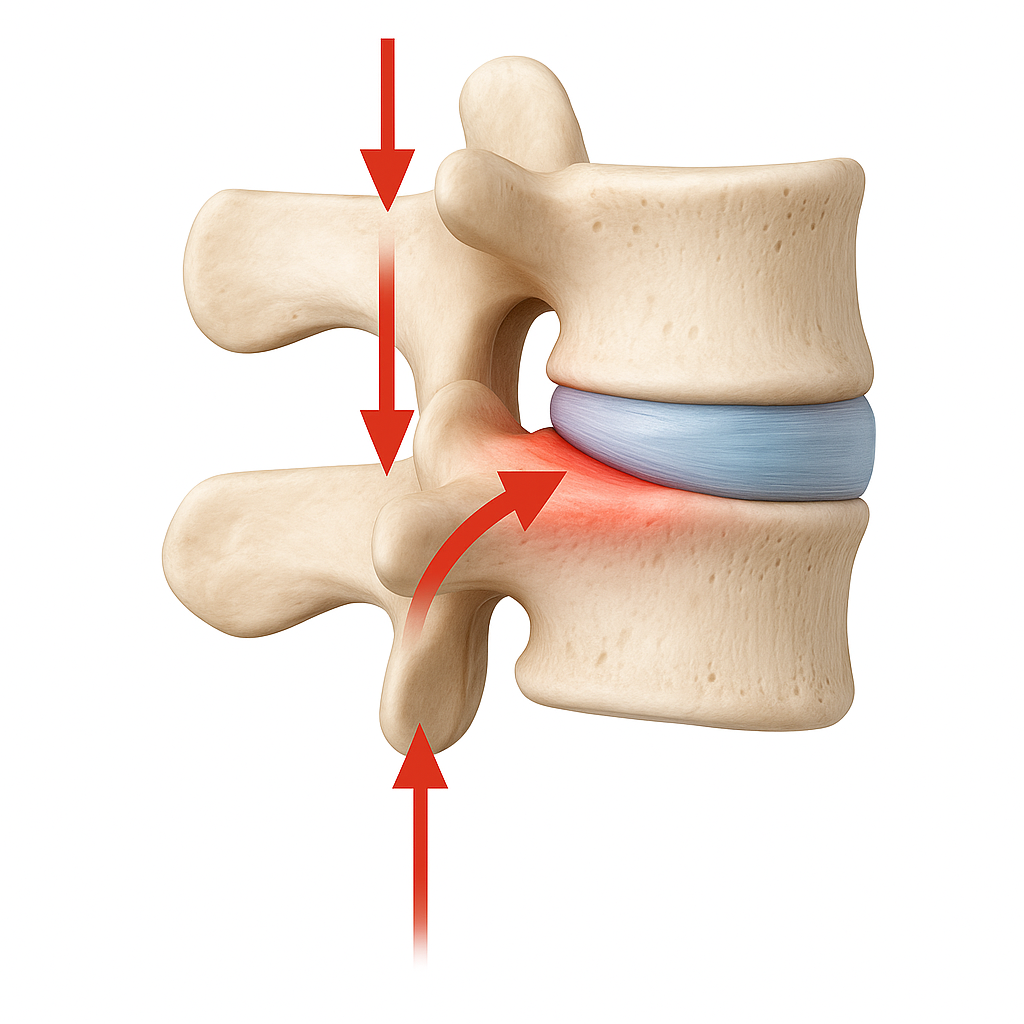
Without movement, intervertebral discs lose fluid and height (red marker shows pressure); regular relief counteracts this and maintains back health.
Never underestimate the effect of short exercise breaks. Even micro-pulses of 1-2 minutes per hour can significantly boost your energy levels and mood. Studies show: People who get up more often or walk a few steps stay more alert and focussed throughout the day and feel less exhausted in the evening. These mini-activities keep your circulation going, stabilise your blood sugar and release muscular tension without you having to break a sweat.
This is where Isa comes into play: As an intelligent pulse generator, Isa reminds you at just the right moment to stand up, stretch or take a few steps. These seemingly small interruptions have a huge cumulative effect on your performance and health. Many Isa users already report that they have noticeably less back pain and a clearer head thanks to the regular 60-second intervals. Isa acts as your personal coach in everyday office life, discreetly but firmly. She helps you to establish good habits before your body becomes tired or tense.
At the end of the day, all these micro-movements add up to a big plus: More focus, more energy and a body that still has enough power for you after work. Performance doesn't start in the gym - it starts at your desk. By integrating exercise into your office routine, you'll get the best out of yourself with a clear head, healthy body and motivated mind. Keep at it, your body and your future self will thank you!
You are currently viewing a placeholder content from HubSpot. To access the actual content, click the button below. Please note that doing so will share data with third-party providers.
More InformationYou are currently viewing a placeholder content from HubSpot. To access the actual content, click the button below. Please note that doing so will share data with third-party providers.
More InformationYou are currently viewing a placeholder content from HubSpot. To access the actual content, click the button below. Please note that doing so will share data with third-party providers.
More InformationYou are currently viewing a placeholder content from HubSpot. To access the actual content, click the button below. Please note that doing so will share data with third-party providers.
More InformationYou are currently viewing a placeholder content from Facebook. To access the actual content, click the button below. Please note that doing so will share data with third-party providers.
More InformationYou are currently viewing a placeholder content from HubSpot Embedded Content. To access the actual content, click the button below. Please note that doing so will share data with third-party providers.
More InformationYou are currently viewing a placeholder content from HubSpot. To access the actual content, click the button below. Please note that doing so will share data with third-party providers.
More InformationYou are currently viewing a placeholder content from Hubspot Meetings. To access the actual content, click the button below. Please note that doing so will share data with third-party providers.
More Information